
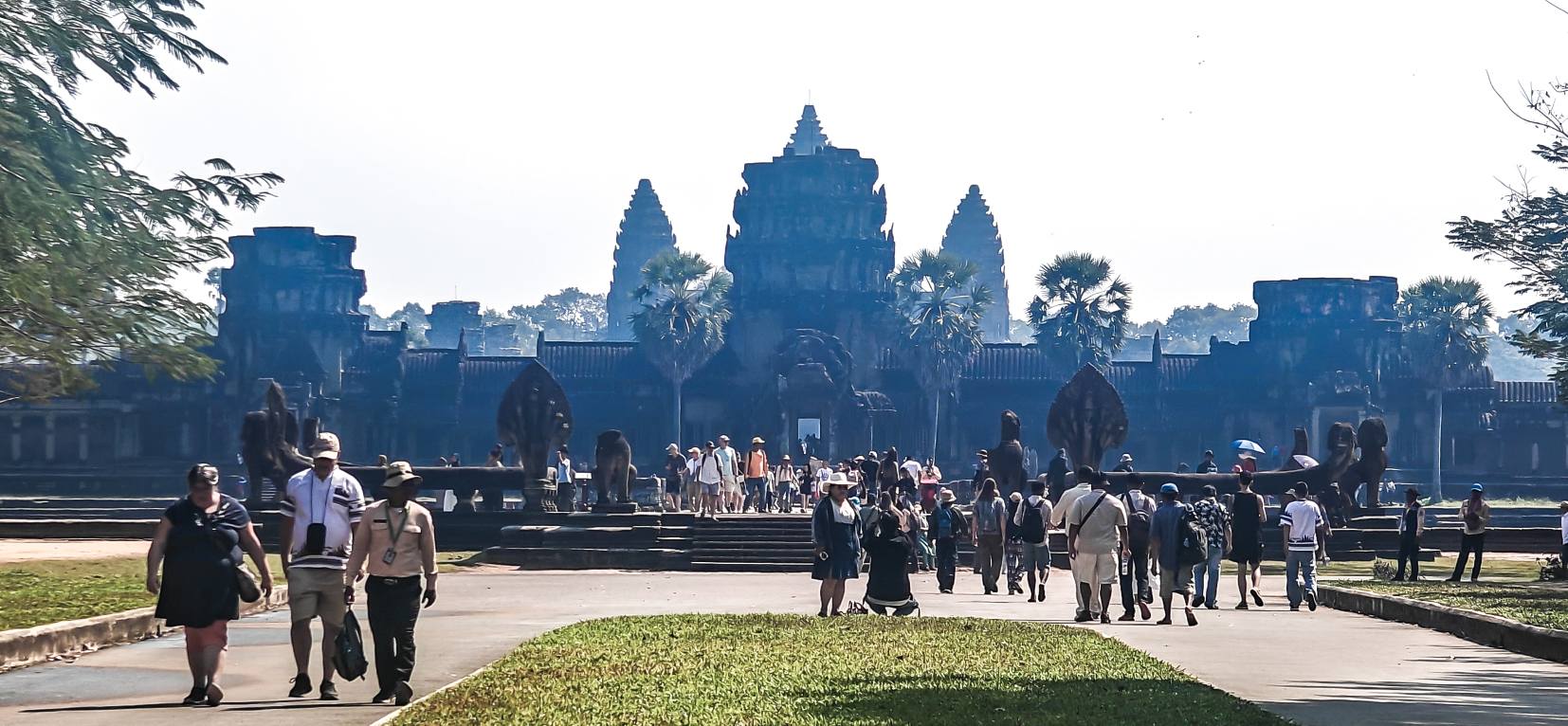
Why do certain places linger in memory long after the journey itself has ended?
Often it is not the monuments alone that remain with us. Not even the landscapes that first drew us there. What stays instead is something quieter — the rhythm of unfamiliar evenings, conversations drifting across restaurant tables, and the feeling of walking through streets where languages from around the world blend into the same night.
My three days in Cambodia unfolded in that way.
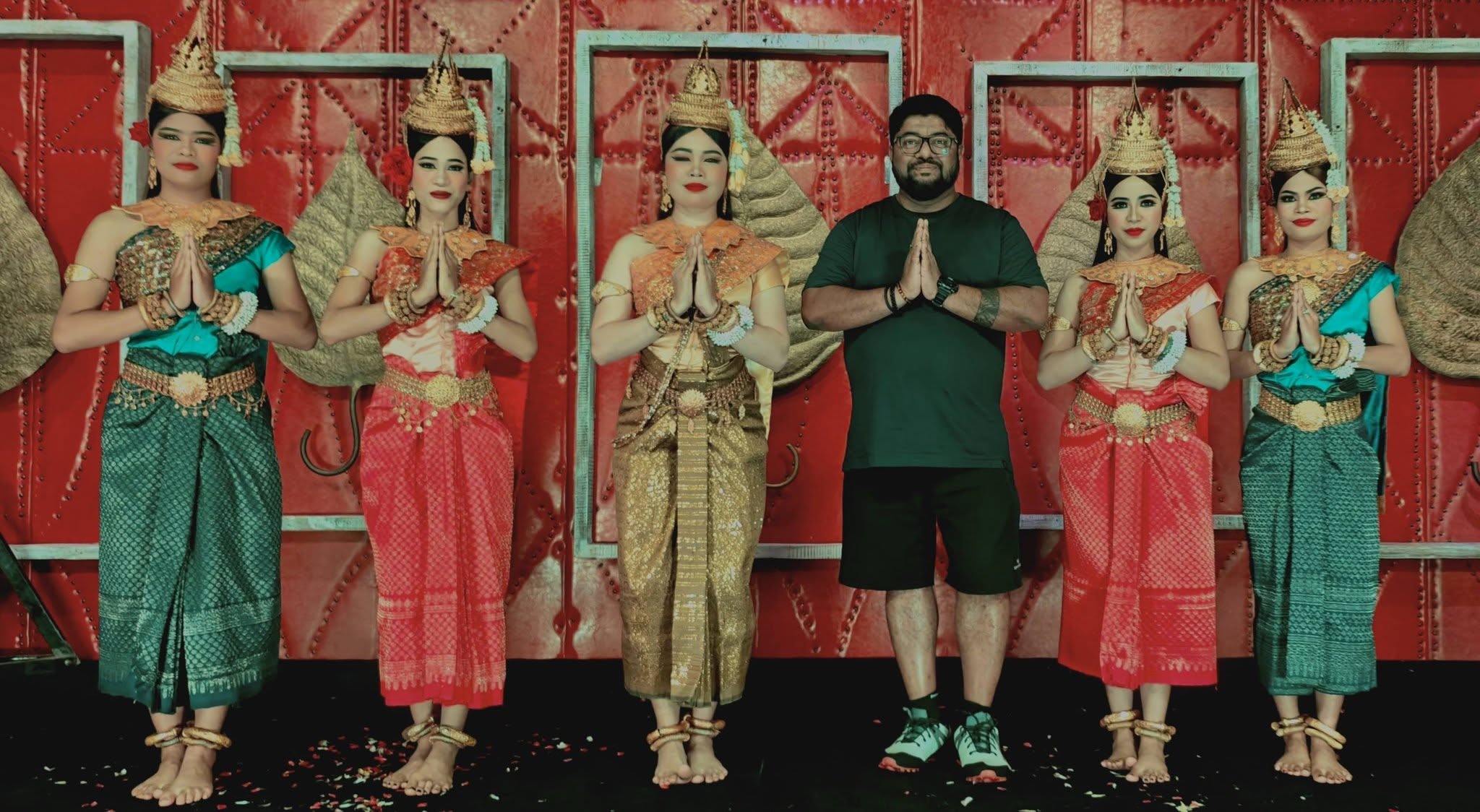
Arrival — The First Evening in Siem Reap
I reached Siem Reap just as the evening light was softening. The town carried the relaxed rhythm of a place accustomed to welcoming travelers from across the world.
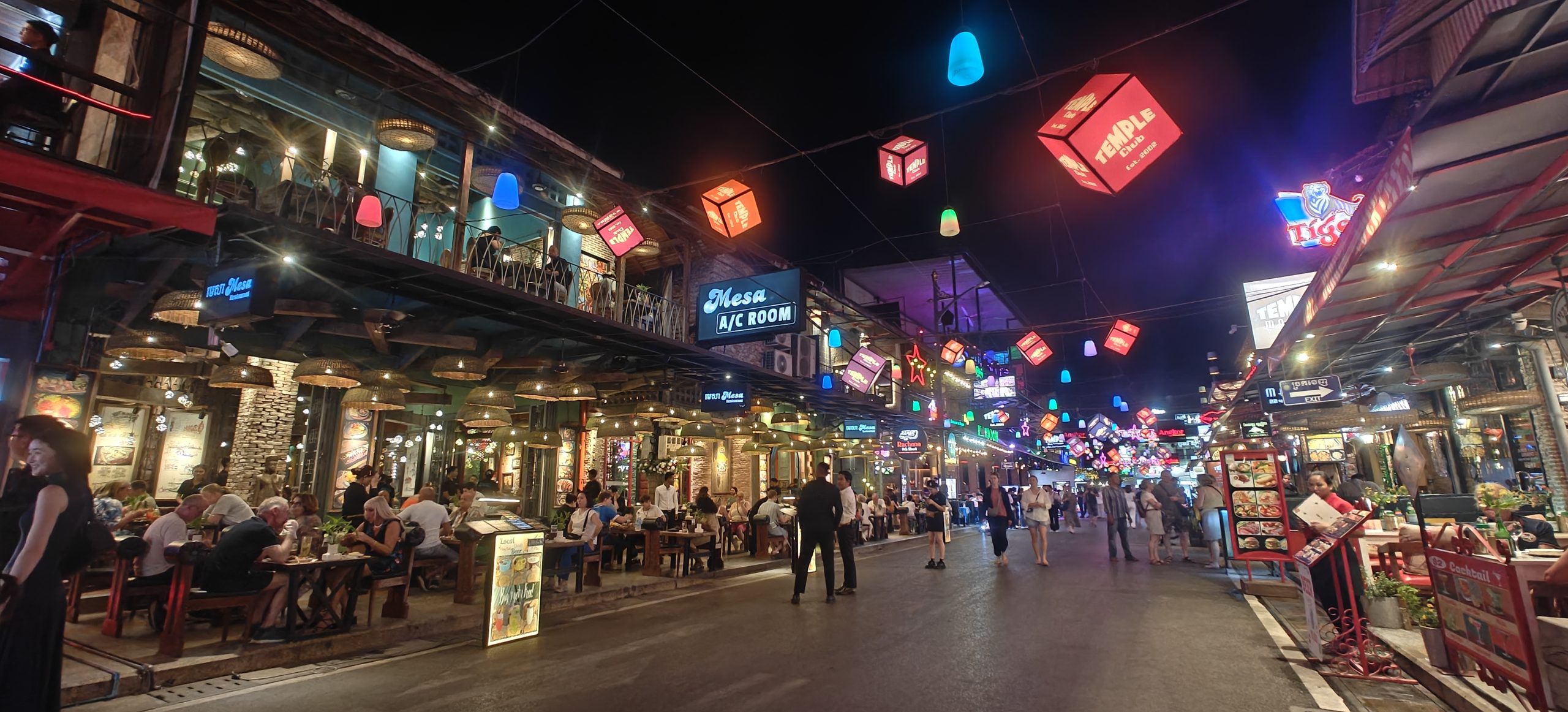
After checking in, I walked toward Pub Street — the lively heart of the town once the sun begins to set. Restaurants spilled onto the sidewalks, music drifted through the warm air, and travelers wandered slowly between cafés and bars.
I ordered a cold beer and watched the street come alive.
Day One — Walking Through Time at Angkor
Some places seem to exist outside ordinary time. You arrive as a traveler following roads and guidebooks, but slowly the place begins to reveal something older — something shaped by centuries rather than days.
That was the feeling on the morning we drove toward Angkor.
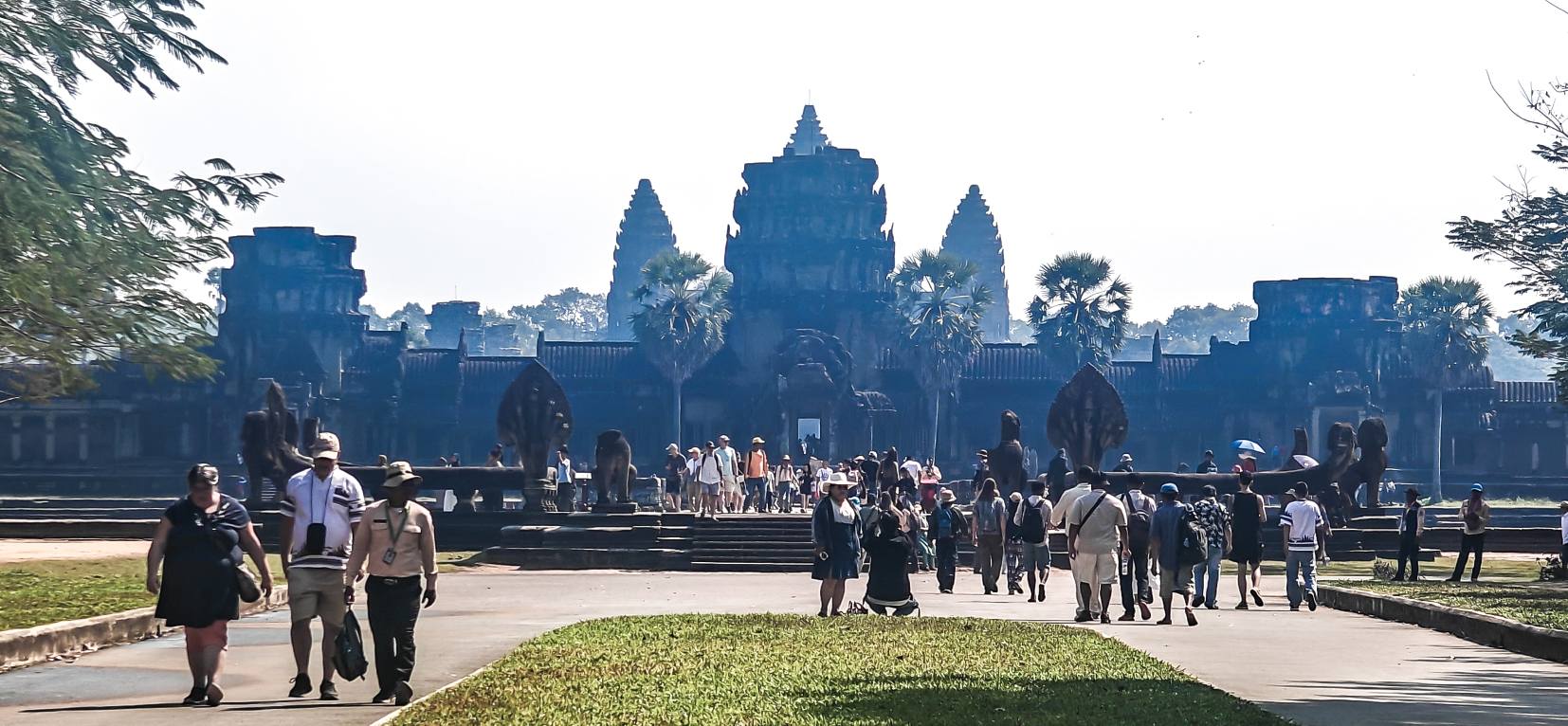
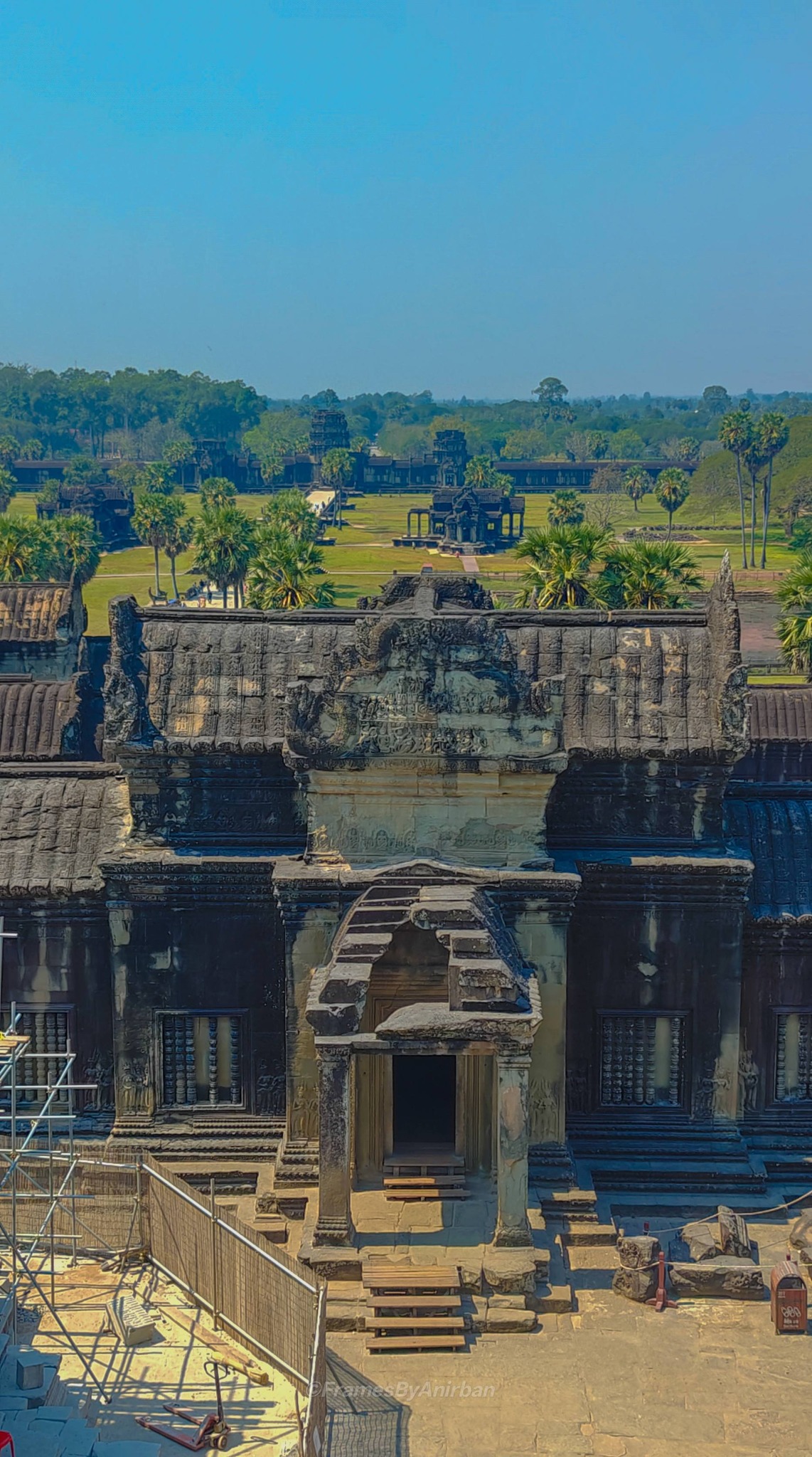
Angkor Wat is not simply a monument. It is the surviving symbol of the Khmer Empire, a civilization that once dominated much of Southeast Asia.
Walking through its entrance felt less like entering a temple and more like stepping into an entire civilization.
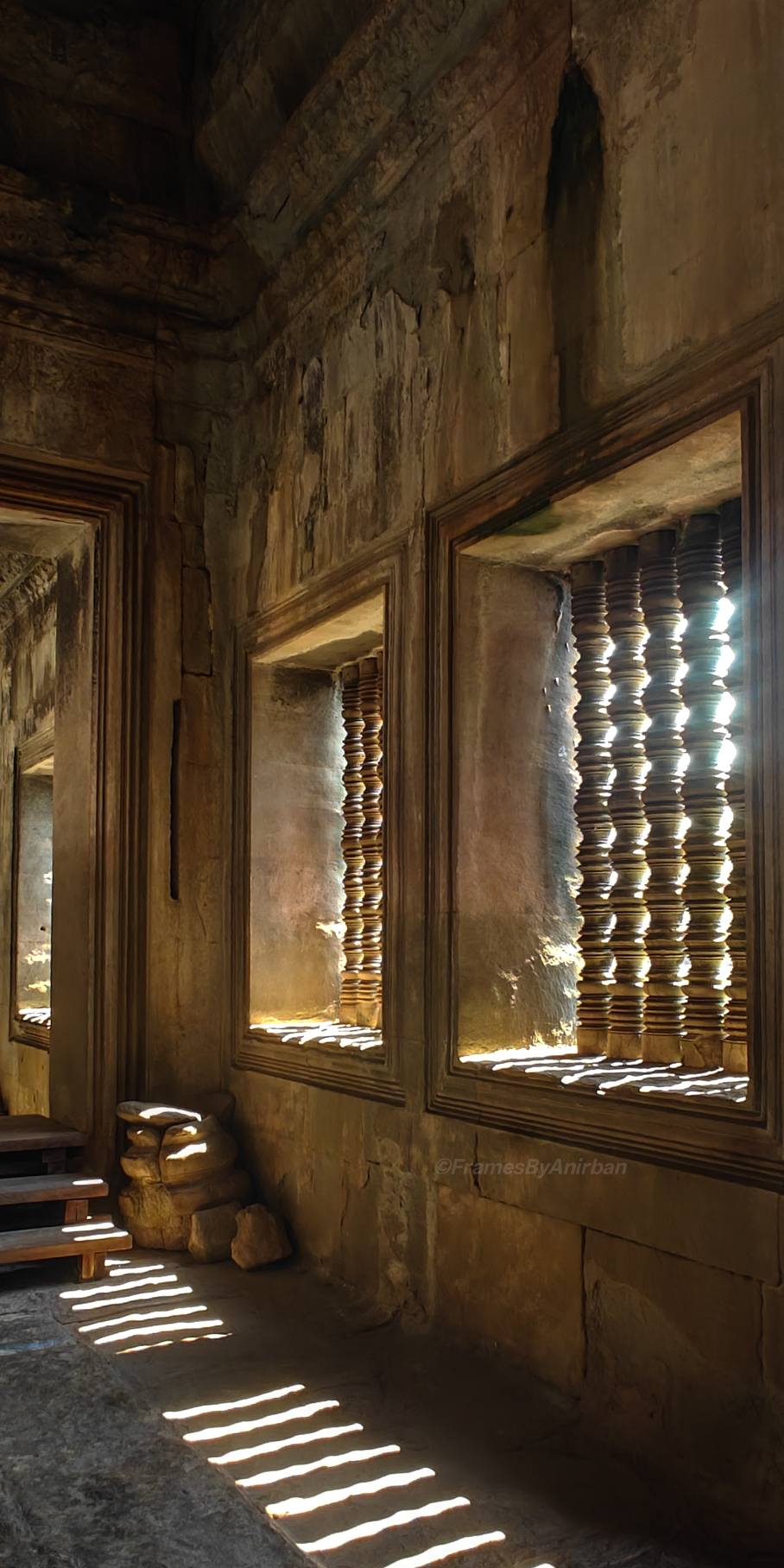
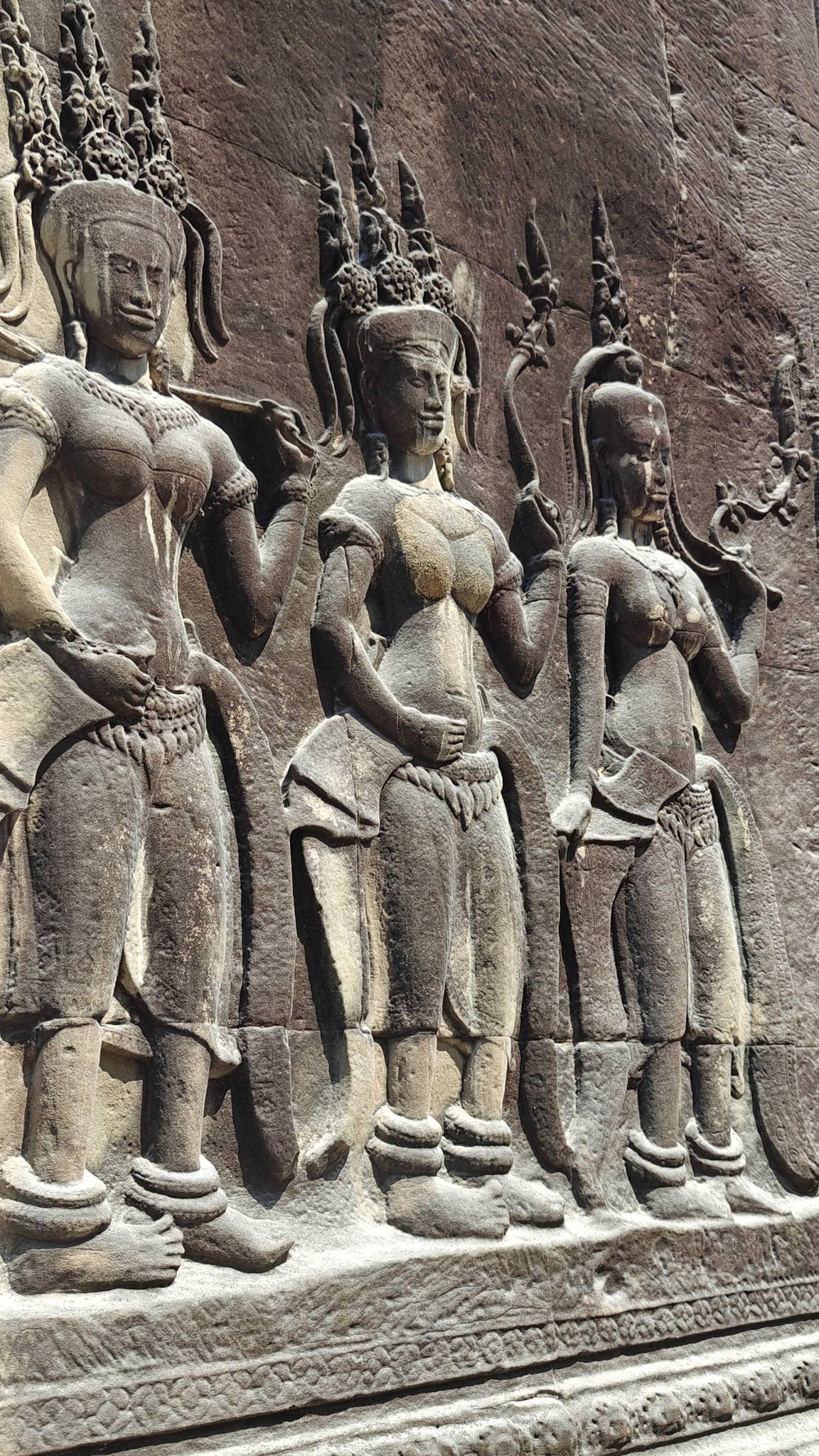
Stone walls were covered in intricate bas-reliefs — scenes from ancient epics, celestial dancers, and stories carved patiently into sandstone.
The Temple Embraced by the Jungle
Ta Prohm reveals something different about Angkor. Here, the jungle and the temple exist together in a remarkable balance.
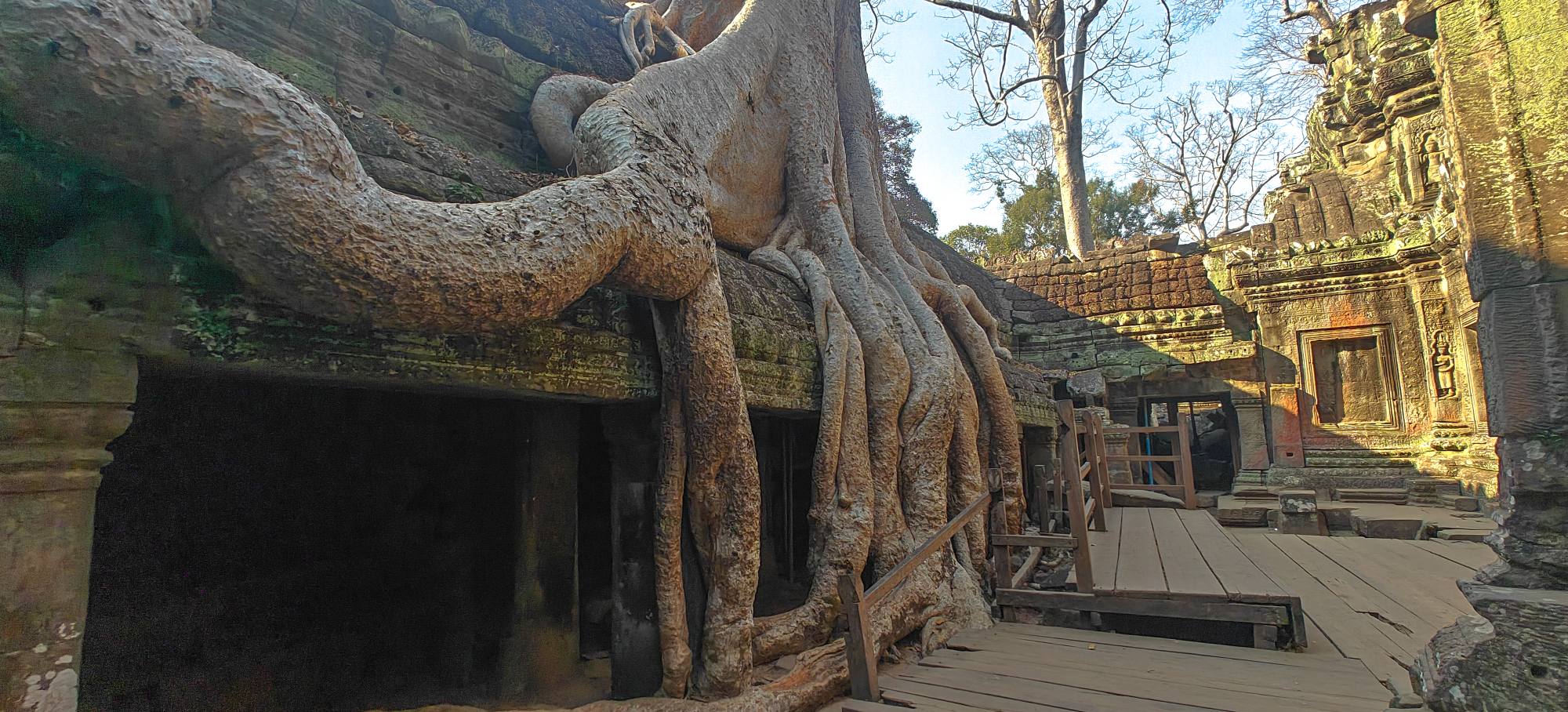
Standing there, one begins to understand something simple about history.
Civilizations build with ambition and belief. Nature waits patiently.
And eventually, nature returns.
Day Two — Kulen Mountain and the Sacred River
The following morning we traveled toward Kulen Mountain, inside Phnom Kulen National Park.
The road climbed gradually through forests and small villages. The atmosphere changed as we left the town behind.
Kulen Mountain holds deep historical meaning for Cambodia. It was here that King Jayavarman II declared independence in the 9th century, marking the beginning of the Khmer Empire.
Hidden within the forest lies a remarkable place known as the River of a Thousand Lingas — Kbal Spean.
At first glance it appears to be a simple jungle stream.
But beneath the flowing water are hundreds of carvings etched directly into the riverbed — small stone lingas, ancient symbols of fertility and creation.
The river flows continuously over them, carrying their sacred symbolism downstream.
Standing there in the quiet forest, it felt like a place where spirituality and nature meet without ceremony.
Tonle Sap Lake
The next day we traveled toward Tonle Sap, the largest freshwater lake in Southeast Asia.
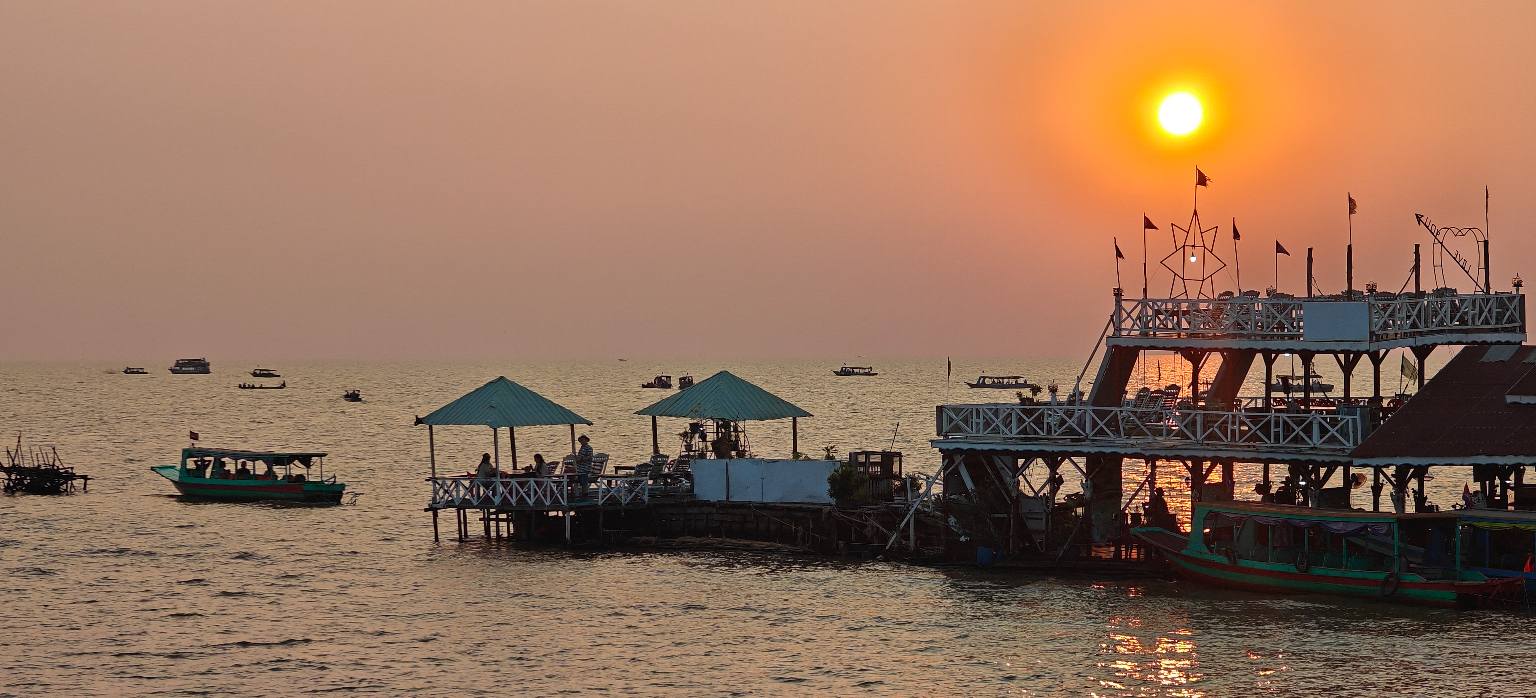
Wooden houses stood on tall stilts above the water. Boats drifted slowly between them, carrying fishermen and families across the lake.
The Quiet End of a Journey
The next morning I began my journey toward Bangkok, leaving Cambodia behind.
Yet journeys rarely end when the road changes direction.
People come to Siem Reap for the temples. But what they remember are the moments surrounding them — hidden rivers in the forest, dancers preserving ancient traditions, sunsets over wide lakes, and evenings where strangers gather under the lights of a lively street.
Only three days.
And yet those days somehow felt connected to centuries of history.