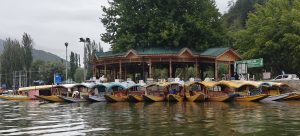
There are journeys you plan, and there are journeys that plan you.
Ours began the way the best ones often do — not with a decision, but with a joke. Nearly four months before we stood on the tarmac at Srinagar, the three of us — Pankaj, Prithwi and I — were only talking. It was the lighthearted kind of talk, the sort friends toss around a table without really believing in it. Should we do Amarnath this year?
Nobody committed. Nobody said no. And then, quietly, one task led to another. We went for the medical test. We booked our slot. And when both of those were somehow behind us, we looked at each other and thought, Well — why not? Let’s book the tickets. That is how a passing remark hardened into a pilgrimage.
The Route That Closed The plan
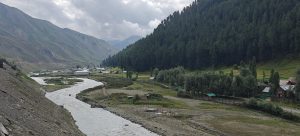
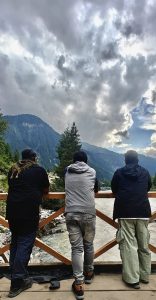
Our plan was to approach through Pahalgam. Every trekker who has been to Kashmir knows why. The Pahalgam route is longer, slower, and impossibly beautiful — meadows that seem to have been combed by hand, rivers that argue with the stones, valleys that open like held breath. We wanted the scenery as much as we wanted the darshan.
Then, just five days before departure, the news came: a landslide, the route shut. And again it opened on 29th July. We were happy and worried. We carried that worry onto the flight with us. But the mountains have their own arrangements, and with the blessings of Shiva we landed in Srinagar only to have it confirmed — Pahalgam was closed. The single door still open was Baltal. Baltal is the shorter road, and the steeper one. It asks more of your legs and offers less time to admire the view. But a closed route is not a rejection; it is a redirection. We took it.
Liyakat’s Home
If the Himalayas take things from you — comfort, breath, certainty — they also give, and often the giving arrives in the shape of a person. For us, that person was Liyakat. I first met Liyakat on the Kashmir Great Lakes trek back in 2021.
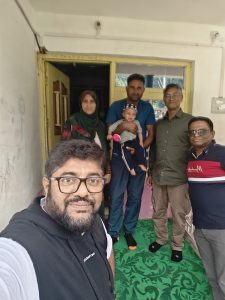
He is from Sonamarg, and he is simply one of the finest men I know — the kind of friend the mountains hand you and expect you to keep. He was waiting for us with his Innova, and the moment the four of us were in the car, the trip felt less like a logistics problem and more like a homecoming. On the way to Baltal, without warning, Liyakat pulled the car up outside his own house. Lunch, he insisted. And so we ate — a proper, unhurried meal in his home, with his family around us. His youngest, only nine months old, was there; the two older children were away at school, so I missed them this time, though I have met them before. His wife may still recognise me — I have stayed under this roof once already. There is a particular grace in being fed by a friend’s family on your way to a holy cave. It felt like the journey had been quietly consecrated before it truly began.
The Night It Rained
We reached Baltal around three in the afternoon on the 1st of August and settled into a good camp. Then, in the evening, it began to rain. Anyone who has waited out weather in the mountains knows the specific anxiety of that sound on canvas. Rain here is not just rain; it is a verdict on tomorrow. If the route closed overnight, the whole thing was off. We went to sleep uncertain, listening. Luck held. Or Shiva held. In the morning the road was open.
Fourteen Up, Fourteen Down
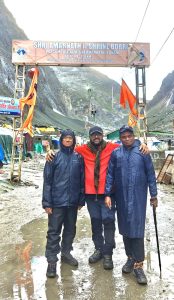
We set out at 3:30 a.m. into steady, unrelenting rain. We hired a single horse, not to ride but to carry — we dumped our bags on it and began to walk. We did climb onto the horse for a while, but the saddle turned out to be more punishing than the trail, so
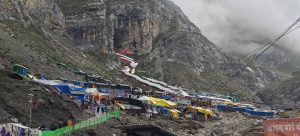
we got down and gave ourselves back to our own two feet. On these paths, walking is not the hard option. It is the honest one. What no one quite prepares you for is how fed you are on this pilgrimage. Amarnath may be one of the most generous stretches of mountain in the country. The langars appear one after another — hot food, given freely, offered with a warmth that has nothing to do with the temperature outside. You are never hungry on this road. You are only tired. And tired we were, because Baltal makes no compromise: fourteen kilometres up and fourteen kilometres down, all of it in a single day. But the climb rewarded us. We reached the cave at around a quarter to ten, and the crowd — mercifully, astonishingly — was thin. The darshan was everything we had walked for. There is a stillness inside that ice that the words good or excellent cannot hold; you simply stand, and something in you goes quiet. By noon we turned back. We reached camp again by half past five in the evening, soaked, spent, and lighter than when we had left.
What Came After
The cave was the summit of the trip, but not its end. The next morning we started for Sonamarg and next morning, made our way up to the Thajiwas Glacier, that great sheet of ice above Sonamarg that always looks a short walk away and never quite is. But if Amarnath was the reason we had come, what followed was the reward we hadn’t thought to ask for.
Wazwan in Sonamarg
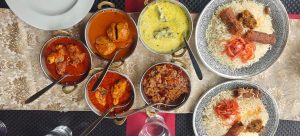
Back in Sonamarg, we finally sat down to a proper Wazwan. If you have never eaten it, no description will do it justice, and if you have, you already understand why I am struggling. The Wazwan is not a meal; it is a ceremony — the great feast of Kashmir, dish after dish arriving in slow, deliberate procession, each one richer and more fragrant than the one before. It is food built over long hours and eaten with something close to reverence. Ours was, quite simply, extraordinary — the kind of eating that makes a table fall quiet and grateful. After days of langar food carried up a mountain and given freely, to be served a Wazwan felt like the valley itself sitting us down and saying, now, rest.
The Evening the Lights Glittered
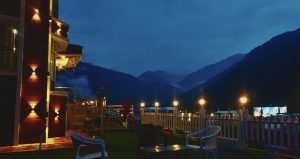
That evening in Sonamarg, it rained again. And yet the rain did something unexpectedly beautiful. Through it, the dim lights of the hotel and the little market did not dull — they glittered. Every modest bulb caught the wet air and the puddles and doubled itself, so that the whole small town seemed strung with soft, trembling light. There is a particular magic to a mountain town in the rain that no clear evening can match: the edges soften, the darkness deepens, and the world shrinks down to warm glowing windows and the steady sound of water. We stood out in it longer than was sensible, just watching the town shimmer.
The Window in the Clouds
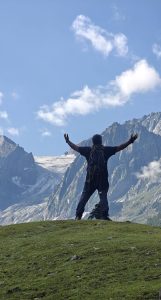
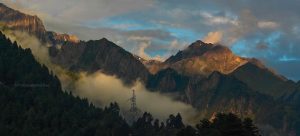
And then came the moment I will carry longest. We were at our Sonamarg hotel when the rain finally stopped. For a few seconds the sky simply held its breath. And then, as though a hand had drawn back a curtain, a single window opened in the clouds — and the light came pouring through it onto the mountains. The peaks turned to gold. The snow at the top caught fire, quietly. It was a sudden, unrepeatable spill of golden colour across the snow-clad ranges, and it lasted only as long as that gap in the cloud allowed before the grey closed over it again, as if it had never happened at all. We didn’t say much. There was nothing to add. The valley had shown us one thing more, and then folded it away.
The Long Road to Gurez
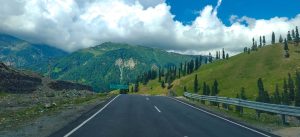
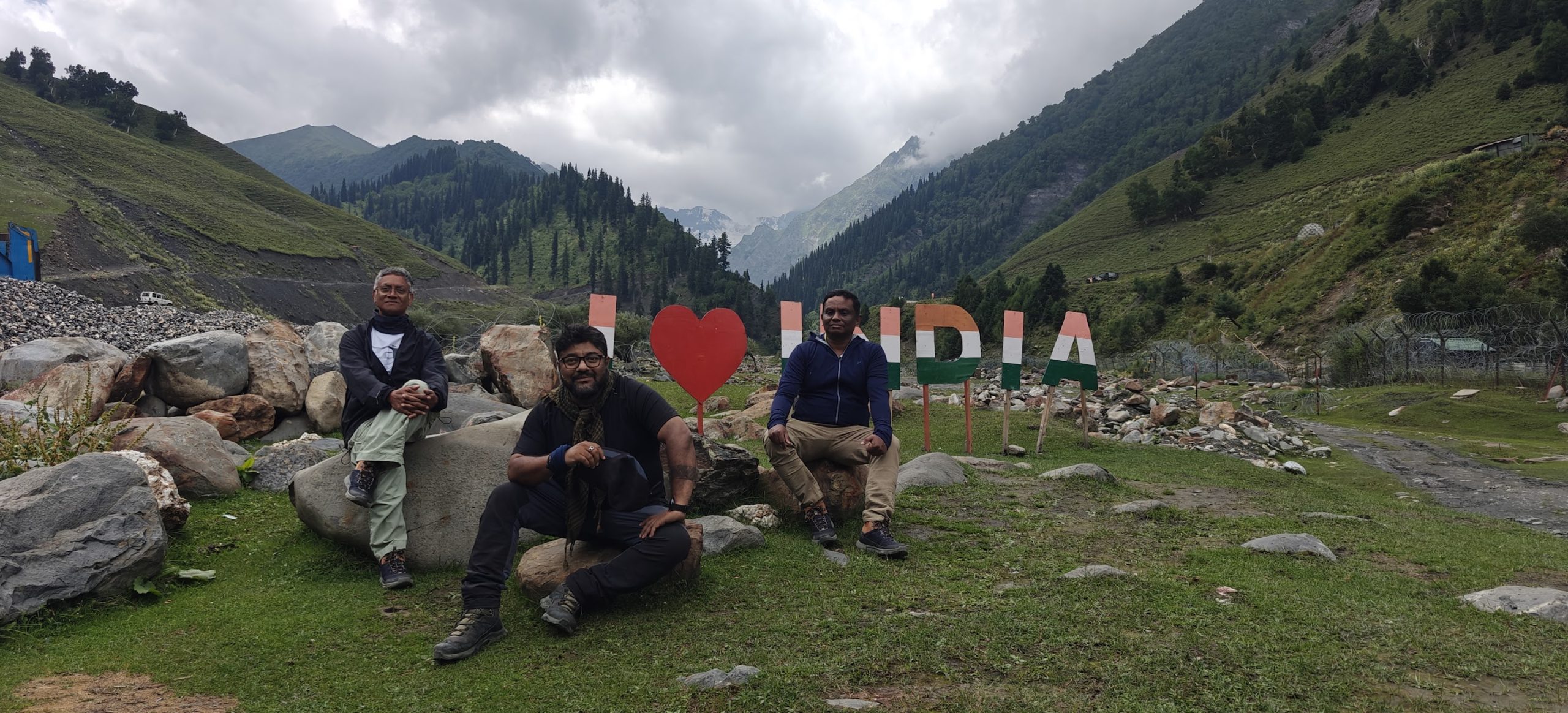
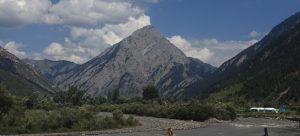
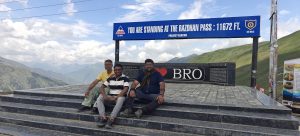
From Sonamarg, we drove out to Gurez. Gurez has been in my bucket list for a long long time. We crossed the high Razdan Pass to reach it, and the crossing itself feels like stepping through a threshold between two worlds. On the far side the valley unfolds along the Kishanganga, and the noise of everywhere else simply falls away. Gurez is one of those increasingly rare places still untouched enough to make you protective of it — the kind of valley you almost hesitate to name in a blog for fear that too many will come and change it. And then you see the peak. Habba Khatoon Peak rises in a near-perfect pyramid over the valley, named for the poet-queen of Kashmir whose songs of longing are still sung here centuries after her. There is something fitting about a mountain shaped like that keeping watch over Gurez — as though the valley had been composed rather than merely formed. We stood looking at it far longer than the schedule allowed. Some views ask you, for a moment, to stop being a traveller and simply be a witness.
Tulail, and Houses Made of Trees
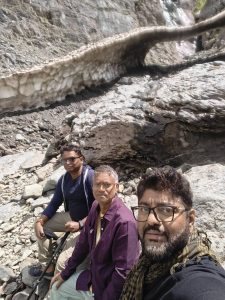
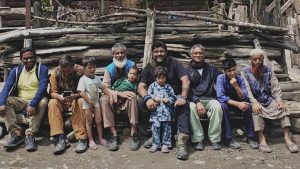
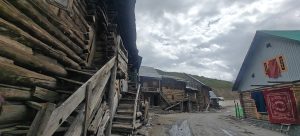
We pushed further east still, along the road that runs toward the Chakwali border — the thin, watched edge of the country, where the Line of Control is never quite out of mind. It is a humbling drive. The valley narrows, the peaks lean in close, and you become very aware of how small three friends in a car are against all that stone and history. But it was the villages of the Tulail stretch that stayed with me. Here the homes are built the old way — of wood, of stacked logs and honest timber, houses that look as though they grew out of the same forest standing behind them. There is no glass-and-concrete ambition in them, only the plain logic of people who have wintered in this valley for generations. To walk among those wooden homes is to feel time slow. They were not built to impress a passing stranger. They were built to endure, and to keep a family warm through months of snow — and somehow that makes them lovelier than anything designed to be photographed.
The Shopkeeper Who Fed Us
If Liyakat’s kitchen had blessed the beginning of our journey, Gurez blessed it once more near the end — this time through a complete stranger. We had only stepped into a small shop, the ordinary business of buying something we needed. But the man behind the counter would not let us leave as mere customers. Before we quite understood what was happening, he had taken the three of us into his own home and set food in front of us — a plate of biryani, and a local dish alongside it, pressed on us with the quiet insistence that is the true grammar of Kashmiri hospitality.
We had come to buy from him. We left having been fed by him. This is the thing no itinerary can promise and no guidebook can arrange: in these valleys a shop can turn into a home and a shopkeeper into a host, and you walk away carrying a debt of kindness you can never repay to the right person — only pass on, one day, to the next stranger who needs it.
And then, finally, back to Srinagar, where the whole thing had begun eight days earlier as a route we couldn’t take and a plan we weren’t sure we would keep. What the Mountains Kept is these Eight days.
One closed road. One friend’s table and one stranger’s. One night of rain that decided everything, and one that lit up a whole town. One window of gold that opened in the clouds and shut again. One cave that asked for our legs and gave us back our stillness.
We had come chasing a darshan. We left understanding, once again, what these mountains keep teaching me — that you do not conquer a place like this. You are simply allowed through, if the weather agrees and the gods are in a giving mood. Ours, all eight days, were.
Har Har Mahadev !!