
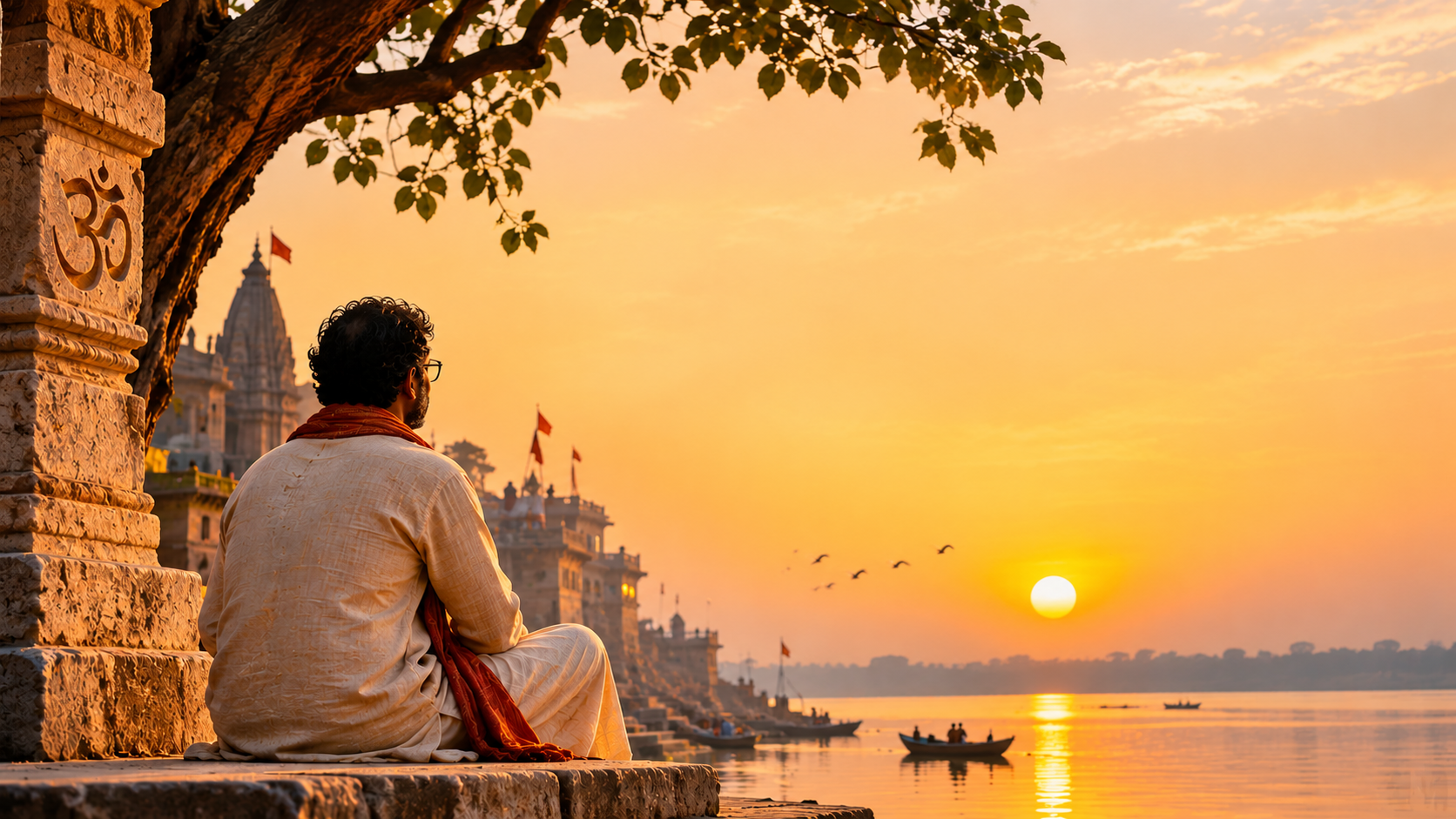
We all have watched it grow quietly for a while now. A joke about how we pray. A sneer at what we eat, or don’t eat. A lecture every Diwali about crackers, every Holi about water, every Ganesh Chaturthi about immersion, delivered by people who stay silent through the rest of the year.
On their own, each comment looks small. Together, they form a pattern. And that pattern has started to hurt me and many Hindus like me in a way I can no longer keep to myself.
This is not a feeling limited to my social media feed. Researchers at Rutgers University’s Network Contagion Research Institute have documented anti-Hindu memes, slogans and coded hashtags spreading across platforms. Legislatures from Georgia to New Jersey have passed or introduced resolutions condemning anti-Hindu bigotry. Hindus abroad report slurs and vandalised temples. And here at home, in a country where Hindus are the majority, a quieter version plays out daily in our timelines, newsrooms and drawing rooms.
I want to write about it honestly. Not with anger, but with clarity. And I want to end where my faith has always taught me to end: with peace.
Less a religion, more a way of life…
Hinduism has no single founder, no single book, no single prophet and no single headquarters. Its own followers call it Sanatana Dharma, the eternal way. It grew over thousands of years out of questions, not commandments.
That is why it holds so much within it. A Hindu may worship Shiva, Vishnu, Devi, or a village deity whose name appears in no textbook. A Hindu may worship nothing at all and still be Hindu. Some of our greatest texts are arguments: the Upanishads question, the Gita debates, the Charvakas doubted, and none of them were thrown out.
Nobody stands at the door checking whether you are a “proper” Hindu. One family’s rituals are not its neighbour’s. A grandmother’s are rarely her grandchild’s. We were never told how to be Hindu. We were simply allowed to be.
It is a faith that has lived alongside Buddhism, Jainism, Sikhism, Islam, Christianity, Zoroastrianism and Judaism on the same soil for centuries. The Parsis landed in Gujarat and were given a home. Jewish communities in Kochi lived without fear. Vasudhaiva Kutumbakam — the world is one family — is not a slogan we invented for conferences. It is how ordinary Hindu households have lived.
So when this way of life is painted as backward, violent or shameful, it does not feel like criticism. It feels like a stranger describing my home without ever stepping inside.
What is being mocked, and how…
The target is rarely theology. It is everyday life — the visible, joyful, ordinary parts of being Hindu. The clearest way to see the problem is to put the same kind of practice side by side across faiths.
Festivals
• Hindu: Every October, celebrities, brands and schools run “say no to crackers” messages for Diwali. Holi brings water-saving lectures; Ganesh Chaturthi brings sermons on immersion and noise.
• Others: New Year’s Eve fireworks light up the same cities with far less moral commentary, even though the Supreme Court’s 2018 order restricts crackers on Christmas and New Year as well as Diwali. The law treats festivals alike. Much of the public commentary does not.
• Hindu: Jallikattu was banned by the courts on animal-welfare grounds, and activists campaign loudly against animal sacrifice at Hindu temples.
• Others: Large-scale animal sacrifice during Eid al-Adha is discussed far more cautiously, usually framed as a cultural matter best left alone.
Food
• Hindu: Vegetarianism is mocked as caste snobbery; Navratri fasting is called superstition; a request for a sattvic meal invites eye-rolls.
• Others: Halal and kosher requirements are accommodated respectfully by airlines, offices and restaurants. Ramadan fasting is admired as discipline. The same courtesy is rarely extended to Hindu dietary practice.
Rituals and symbols
• Hindu: A tilak, a kalava on the wrist or a rakhi has led to students being scolded or punished in some schools, and such stories seldom trouble national commentary.
• Others: During Karnataka’s 2022 hijab dispute, much of the media and many public voices defended the hijab as personal choice and religious freedom — a principle worth defending. The question is why the same principle goes quiet when the symbol is Hindu.
Gods and stories
• Hindu: M.F. Husain’s nude paintings of Hindu goddesses were widely defended by the art and media establishment as artistic freedom. Comedians and web series joke about Hindu deities with little consequence.
• Others: India banned the import of The Satanic Verses in 1988. Most Indian publications declined to reprint the Danish cartoons in 2005 or the Charlie Hebdo cartoons in 2015. In 2022, a party spokesperson’s remarks about the Prophet drew diplomatic protests from several countries and her suspension — rightly treated as serious. Hindus ask only that their sacred figures be taken as seriously.
Ordinary behaviour
• Hindu: An aarti, a coconut broken before a new vehicle, touching an elder’s feet — these get labelled superstition or a regressive mindset.
• Others: Saying grace before a meal, a priest blessing a new home, offering namaz during a workday are respected as expressions of faith. They should be. So should ours.
A case study: one fast, two verdicts…
Nothing shows the double standard more plainly than how parts of the press write about fasting.
On 29 October 2026, The New Indian Express published a piece on Karwa Chauth titled “The Hunger Games of Karwa Chauth” — comparing a festival of marital devotion to a film about children fighting to the death. Readers soon dug up an earlier article by the same journalist, “Feasts of Faith: The Role of Food in Ramzan” (March 2025), which described Ramzan with warmth as a celebration of faith, perseverance and community. After the screenshots went viral, both articles were taken down.
It was not the first time. Readers also recalled two Indian Express health articles from 2024: one warning women that fasting may disrupt their hormones, the other explaining how Ramadan fasting can help with weight loss, blood sugar and cholesterol. In March 2025, a similar pair of Hindustan Times posts went viral for the same contrast.
Now look at the facts of the two fasts…
• Duration: One day a year (Karwa Chauth) vs About 30 consecutive days (Ramzan)
• Food and water: None, from dawn to moonrise (same for both)
• Who may skip: Anyone; it is a personal choice (Karwa Chauth) vs The ill, pregnant, elderly and that too is not always followed
The body does not check the religion of the person fasting. If going without water from dawn to dusk is a health risk, it is a risk on both occasions — and doctors do rightly warn about dehydration, including one widely reported case of a woman who suffered a stroke after a waterless Karwa Chauth fast in 2025. If fasting brings metabolic benefits, those apply to a Hindu woman on Karwa Chauth too.
An honest health desk would give both groups the same advice: hydrate well before and after, eat sensibly, and skip the fast if you are pregnant or unwell. What it would not do is call one fast “faith” and the other “hunger games.”
Let me be clear about what I am not saying. I am not saying other faiths should be mocked more. They should not be mocked at all, and the respect shown to them is right. Nor am I blaming ordinary Christians or Muslims, most of whom never asked for this double standard.
The double standard has its own reasons. Some fear a violent backlash from extremists. Some believe minorities need protection and the majority can “take it.” Some simply find Hindus the safest target. Whatever the reason, the result is the same. Hindu practice has become the one tradition it is always safe, even fashionable, to ridicule. All we are asking for is consistency: one standard of respect, for everyone.
The part that hurts most…
I can make peace with an outsider who misunderstands. What stings more is when the loudest mockery comes from within.
There is a section of Hindus — educated, articulate, often well-meaning — who have learned that sneering at their own traditions earns applause. They roll their eyes at their grandparents’ puja in public and quietly attend it at home. They have absorbed the idea that being modern means being embarrassed of where you come from.
Self-reflection is one of Hinduism’s greatest strengths. Reformers from Raja Ram Mohan Roy to Swami Vivekananda to Ishwar Chandra Vidyasagar questioned practices like sati, untouchability and the treatment of widows. They did it because they loved the tradition and wanted it to live up to its highest ideals.
That is reform. What we often see today is something else: contempt dressed up as progress. Reform says, “this practice hurts people, let us change it.” Contempt says, “your faith is a joke, and so are you.” The first builds. The second only breaks.
Who gains from the division…
When the same kind of remark appears again and again, at the same moments, from voices that rarely speak about anything else, it stops looking accidental. I cannot prove a single grand plan, and I won’t pretend to. But I can see the incentives clearly, and incentives explain a great deal.
• Votes. Some politicians have discovered that insulting one community can consolidate another. A remark about a festival or a deity becomes a signal to a vote bank. It costs them nothing and wins them a headline.
• Appeasement. Some speak not from belief but to please a constituency, a donor or an ideological circle that wants Hinduism permanently painted with a dark spot. Their silence about other faiths and their volume about this one tell their own story.
• Attention for hire. In the outrage economy, a provocative post about Hindus is cheap and travels fast. Some content creators and commentators have learned that offence is a business model. A few, it is widely alleged, are paid to keep the fire burning.
• Algorithms. Social media rewards anger. A calm post about a shared festival reaches a hundred people; a mocking one reaches a million. The machine does not care what it divides, only that we keep scrolling.
Selective tears: how politicians choose whom to grieve for…
The hypocrisy is easiest to see in what our leaders choose to mourn, and what they choose to ignore.
• Babri and Somnath. Ahead of the launch of her memoir Belonging: A Journey of Love this month, Sonia Gandhi told The Guardian she cried while watching the Babri Masjid being demolished on television in 1992. Grief at the destruction of a place of worship is human, and that demolition may be controversial. But we have never heard comparable sorrow for the Somnath temple — plundered by Mahmud of Ghazni in 1025 and destroyed again and again over the centuries. When free India rebuilt it, Prime Minister Nehru objected to President Rajendra Prasad attending its inauguration in 1951, calling it revivalism. Tears for one shrine; discomfort with the other.
• Monks on the street. In April 2020, two Hindu sadhus and their driver were lynched by a mob in Palghar, Maharashtra, while police stood by. Investigators blamed child-theft rumours rather than religion. Whatever the motive, many leaders who rightly speak out loudly after other lynchings had little to say about two saffron-clad old men beaten to death.
• “Eradicate” Sanatana Dharma. In September 2023, a Tamil Nadu minister said Sanatana Dharma should be eradicated, comparing it to dengue and malaria. Imagine the national uproar if a minister had said this about any other faith. Instead, several of his political allies avoided clear condemnation and spoke of “context”.
• Ram on trial. In 2007, an affidavit filed in the Supreme Court during the Ram Setu case questioned the historical existence of Lord Ram. It was withdrawn only after public outrage. No government would dream of filing such a statement about the prophet or saint of another religion.
• Election-season devotion. Leaders who sneer at Hindu practice for four years suddenly discover temples, tilaks and sacred threads in the months before an election. Faith becomes a costume worn for the cameras and folded away after the votes are counted.
To be fair, this is not one party’s sin. Politicians who use Hindu hurt to stir anger against Muslims or Christians are playing the same game from the other side. Both treat faith as a vote bank, not a value. Both deserve our scepticism.
None of these motives is about truth, justice or reform. They are about power, money and visibility. And every one of them depends on one thing: that we stop seeing each other as neighbours and start seeing each other as enemies.
Criticism is welcome. Contempt is not…
I want to be fair here, because fairness is the whole point. Hinduism, like every living tradition, has had its dark chapters. Caste discrimination is real and still wounds millions. Some festival practices do strain our rivers and our air. Pointing these out is not Hinduphobia, and Hindus should be the first to say so.
The difference lies in intent and in consistency…
• Names a specific practice and its harm vs Mocks the faith and its followers as a whole
• Applies the same standard to every tradition vs Saves its outrage for one tradition only
• Offers a better way forward vs Offers only ridicule
• Speaks from within, or with respect vs Speaks for applause, votes or payment
• Wants the tradition to improve vs Wants the tradition to be ashamed
A society that cannot tell these two apart will either silence every critic or excuse every bigot. We need to be able to say, in the same breath: let us fix what is wrong, and stop insulting what is sacred to us.
How we answer without becoming what we oppose…
The easiest response to hate is more hate. It is also exactly what the dividers want. If they can provoke us into anger against Muslims, Christians or anyone else, they have won twice: once by hurting us, and again by making us look like the people they described.
So here is what I believe we should do instead…
1. Know your own tradition. Read the Gita, the Upanishads, the stories your grandparents told. A person who knows their roots cannot be shamed out of them.
2. Celebrate openly and joyfully. Light the diya, play the colours, take the idol to the water — responsibly, and without apology. Joy is the strongest answer to mockery.
3. Invite others in. Share your sweets, open your puja to your neighbours, explain a ritual to a curious colleague. Understanding dissolves prejudice faster than argument.
4. Fix what genuinely needs fixing. Lead on eco-friendly festivals and on ending caste discrimination, so no one else gets to use them as a stick.
5. Refuse to be used — by anyone. Those who insult Hindus for votes are one danger. Those who exploit Hindu hurt to spread hatred against other communities are another. Both feed on the same division. Do not lend either of them your anger.
6. Stand up for others too. When another faith is mocked, speak up. The respect we ask for is only credible if we give it.
Hinduism has survived invasions, colonial contempt and centuries of attempts to convert it away. It did not survive by shouting louder. It survived by being rooted, open and quietly confident. That is still our greatest strength.
A message of peace…
I have nothing against any religion, or against the people who follow them. The world is large enough for every faith, every caste, every creed — as long as the message of peace is practised, followed and shared. Shared proudly, the way you share a festival sweet, without any intention of converting the person who receives it.
That is the Hindu way as I have known it. Our prayers do not end by asking for victory over others. They end with Om Shanti, Shanti, Shanti — peace within, peace around us, peace in the world beyond. And among our oldest prayers is one that asks for nothing for ourselves alone:
Sarve bhavantu sukhinah, sarve santu niramayah – May all be happy. May all be free from suffering. Not all Hindus. All.
To those who mock us for votes, for money or for attention… you may win a news cycle, but you will not win our hearts, and you will not turn us against our neighbours.
To my fellow Hindus who join in… question, reform, argue — that is our heritage — but do it with love, not contempt.
And to my friends of every other faith… my door, my plate and my festivals remain open to you, as they always have been.
Division is a business. Peace is a choice. Let us keep choosing it — loudly, proudly, and together…
Om Shanti…
****************************************
Sources:
- Rutgers / NCRI report on online Hinduphobia, via ThePrint ·
- New Jersey resolution condemning Hinduphobia (SCR65, 2026) ·
- Georgia resolution and US anti-Hindu bias efforts, American Bazaar · Rising anti-Hindu hate in the US, New Lines
- More sources: Sonia Gandhi’s Babri remark and BJP response,
- Outlook/PTI, 7 Nov 2026 · TNIE Karwa Chauth controversy, NewsGram ·
- Supreme Court firecracker order covering Christmas and New Year, Scroll
- https://www.freepressjournal.in/mumbai/mira-bhayandar-news-karwa-chauth-fast-without-water-leads-to-stroke-in-33-year-old-woman-doctors-warn-of-dehydration-risks