
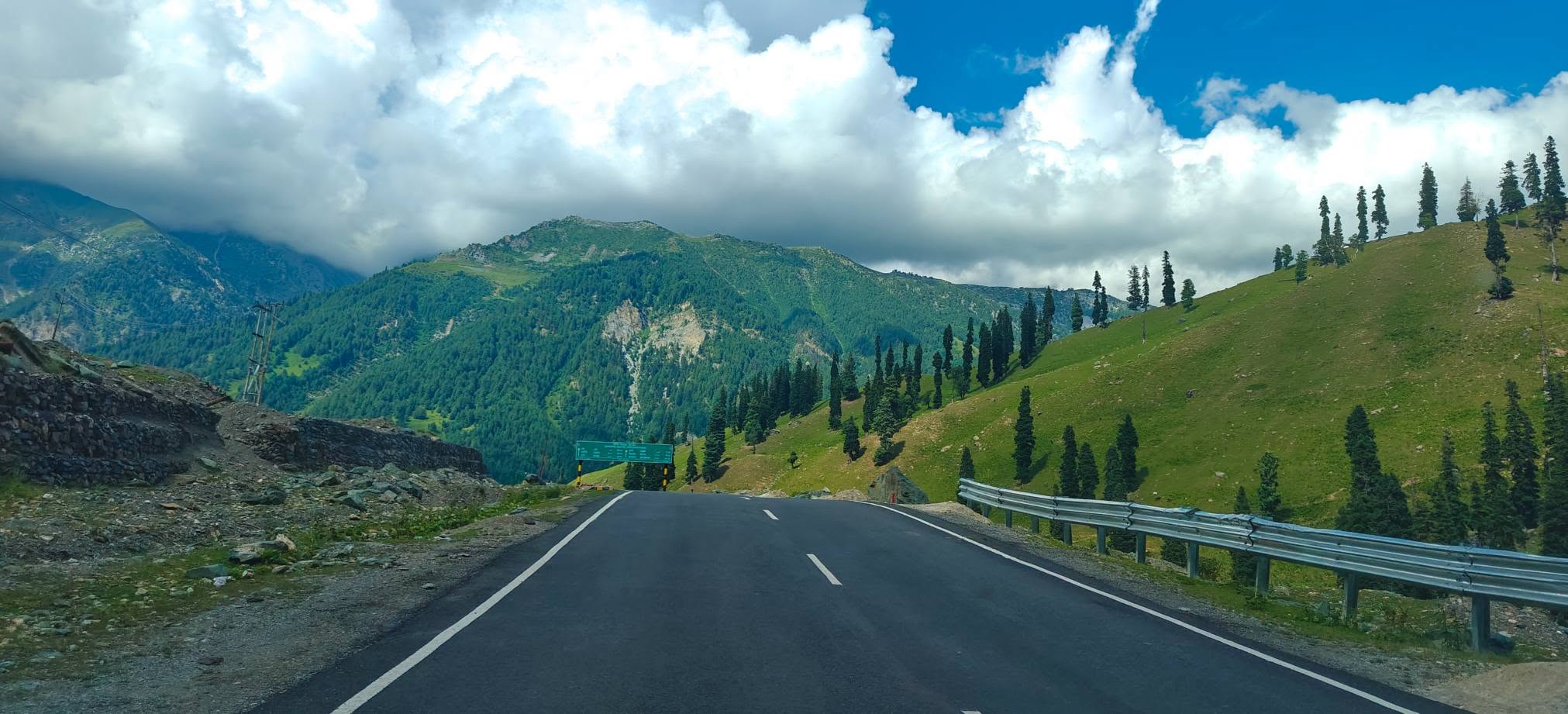
There is a particular hour – sometime between the last tea of the evening and the first silence of the night, or sometimes in the dawn when everyone is still in their slumber – when I stand on my balcony with a lukewarm lemon water, and I stop being what I am – a corporate professional, a husband, a father, or an author (trying to be) chasing the next idea, and become, briefly, a boy again from Subhash Palli, Lumding.
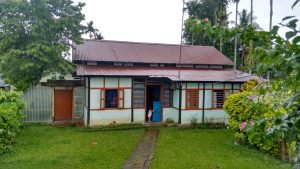
I did not choose this. Nobody does. You do not choose the smell of your grandmother’s warm hug, the sound of your father’s footsteps on the veranda, or the exact pitch of your mother’s voice calling you for dinner while the darkness engulfed the small town of Lumding. These things choose you. They enter you before you have any say in the matter, and then they never leave. Everything else I have built – the pitch decks, the dealer networks, the blogs and books, the treks in the Himalayan trails – sit quietly below that unchosen inheritance.
I have come to believe that love, in a family, rarely announces itself as love. It arrives disguised as smaller things – a wick trimmed evenly, a recitation rehearsed over and over again, a plate quietly refilled before you have asked. We spend our adult lives searching for grand declarations of affection, when the truest ones were handed over to us years ago in gestures so ordinary, we mistook them for habit. It is only from this distance, decades later, that I can see them for what they were.
My father gave me the world before he gave me anything else. He did not teach me business. He taught me to notice. The way morning mist sat over the National higher secondary school field like it had nowhere better to be. The way a tree could be worth stopping for. The way a mountain, a river, a stretch of unremarkable soil could hold a story if you were patient enough to listen.
Every hillside I have since climbed, every sunrise I have chased with a camera, every word I have written about a city or a forgotten monument or a place or someone I just met – all of it trace back to a man who simply refused to let the ordinary pass by unnoticed. He did not lecture me into this. He simply lived it in front of me, and I absorbed it the way a child absorbs a language – without knowing he was being taught. That, I think, is the deepest form a father’s love can take: not instruction, but company. Not a lesson delivered, but a way of seeing quietly, day after day, until the child has no memory of learning it at all – only the sensation of having always known.
My mother’s teaching was quieter and, I now understand, harder. She taught endurance disguised as routine. She taught that showing up – every day, without ceremony – is itself a form of love. It was she who first put words in my mouth and taught me how to stand on a stage and mean them – Tagore’s “Proshno” was my first public recitation when I was in Grade-III, rehearsed at home with her long before I ever said it in front of a crowd in my school Pranab Vidya Pith. I did not appreciate this as a boy. I understood it only decades later, standing in front of my own sons, trying to explain why some forms of love do not announce themselves.
A mother’s love, I have come to feel, is often the least celebrated and the most load bearing. It does not ask to be noticed, and so it rarely is, until the day you find yourself repeating her patience in your own house, with your own children, and you understand, with something between gratitude and grief, exactly whose voice you are borrowing.
There was no electricity in our part of Subhash Palli for the longest time. Evenings meant a hurricane lamp and a table light, and every single day, without fail, my father trimmed the wick evenly so the chimney would not blacken with soot. It sounds like such a small chore now, in a world where light needs no tending. Then, it was an act of devotion – a father quietly making sure his children could read by a clean, steady flame. There is something I find almost unbearably tender about that image now – a man, tired from his own day, bending over a small flame each evening for no reason except that his children’s eyes deserved better light. Love, in that house, was measured in such increments. Not in what was said, but in what was quietly, repeatedly done.
I remember sitting under that same lamp, supposedly studying, actually watching a lizard on the wall stalk a moth with a hunter’s patience, utterly forgetting my books – until my father’s voice reached me from somewhere behind: “Babu, are you reading?” I never once heard him approach. That is what fathers do. They arrive exactly when you have stopped paying attention, and somehow you never resent it. Perhaps that is because the voice itself carried no anger, only presence – a reminder that you were being watched over, not policed. There is a particular safety in growing up inside that kind of vigilance, the sort that corrects gently and forgives instantly.
When I talk about silence of my father and its power, how can I ignore one such incidence that shaped me and my thoughts that very few events ever had. I was in class IV, going to a private tutor after school, when I first understood this – though it took thirty years to name it. My tutor’s elder brother kept his Khaini in a small steel container with two chambers, one for the tobacco and one for lime, and it sat on the table looking more valuable than it was. One evening, when no one was watching, I took it. That night, playing with friends, I pulled it out like a trophy – none of them owned anything like it, and for a few minutes I was the hero of the lane. A senior boy saw the performance and carried the story home before I did. When I walked in, my father asked one question – where did you get it – and I told him the truth, the whole of it, without being pressed twice. He held out his hand. I gave him the container. He said nothing else that evening, not one word of anger, not one word of forgiveness – just silence, which I have since learned is its own language. The next morning, he handed me the container again, along with a sealed letter, and told me to return the container exactly where I had found it and give the letter to my teacher, unopened. I did both. My teacher asked, without naming the object, whether I had put it back where I took it from. I nodded. The episode closed itself right there. Years later I learned the letter simply stated the facts – no accusation, no plea, no performance of shame. No one ever scolded me. Even now, almost fur decades on, that evening returns to me whole – proof that silence, delivered at the right moment, leaves a deeper mark than any words ever could.
Then there was the house that was not quite mine but felt more mine than anywhere else – my grandfather’s home, where the big Mahalaya afternoons happened, where an aunt who asked for nothing became, without meaning to, the most generous person in my childhood. She gave without being asked, gave what my parents sometimes could not, and gave until there was an emptiness where she used to be. I have never been able to repay her. I am not sure that debt was ever meant to be repaid – only carried forward, quietly, into how I treat the people who ask me for less than they deserve.
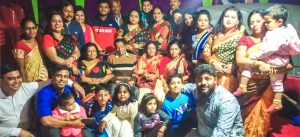
I think often about the strange arithmetic of a joint family – how love did not divide itself among so many people but somehow multiplied instead. There was always more of it than the house had any right to contain. An aunt’s affection did not compete with a mother’s; it simply added another layer of warmth to a child who did not yet know how rare that abundance was. That house never felt quiet, and that was its whole charm.
Cousins underfoot, uncles arguing cheerfully over nothing, someone always cooking for twelve when only six had been expected – a joint family has a way of making a child feel that he is never, ever alone in the world, that there is always another lap to climb into, another elder to correct him, another cousin to conspire with. There was a kind of grace in that constant company, a grace I did not recognize as grace at the time. To grow up surrounded is to grow up believing, wordlessly, that you matter to more people than just your parents – that a whole small society has quietly agreed to look out for you, without ever holding a meeting to decide it.
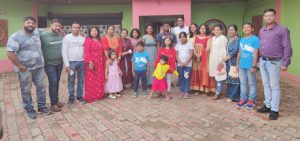
Summer vacations meant the long trip to Silchar, packed into a train, to sit among relatives who fed us before they fed themselves and asked after our studies before we had even set down our bags. I did not understand then that this constant, overlapping noise of family was itself a kind of wealth. I understand it painfully well now, in a nuclear world where a house can be silent for an entire day or some evenings and no one thinks it strange. Togetherness, once so ordinary it went unremarked, has become almost an event in itself – something to be scheduled, traveled for, treasured deliberately rather than simply lived inside.
Festivals, in that world, were never really about the gods. Dressed in fresh clothes on Ashtami morning, running the town’s lanes with boys who are now scattered across continents, dancing behind the dhak on immersion day, fighting for a few drops of Shanti Jal (Divine Water) – none of that was ritual in the way a calendar understands ritual. It was rehearsal. It was the town teaching its children, without saying so, what belonging feels like, so that decades later, in cities that do not know our names, we would still recognize the feeling when it arrived again, faint but unmistakable, carried on the smell of a particular flower or the beat of a particular drum. I think this is what people mean by legacy, though the word sounds too formal for what it actually is.
Legacy is not the things your parents leave behind for you. It is the things they leave inside you – a way of noticing light, a capacity to endure quietly, an instinct to give before being asked, a memory of belonging so complete that you spend the rest of your life trying to recreate its smaller shadow, wherever you happen to be standing. Every embrace I have received since – from a wife, from a son, from a friend on a mountain trail – has, in some quiet way, been measured against the template that house first gave me: that love is patient, that it shows up unannounced, that it feeds more people than it was asked to.
I am, most days, a man talking about business expansion, dealer margins, client relation, go-to-market strategy etc. But underneath that man is still the boy in Subhash Palli, cold and half-asleep before dawn, listening to a voice on the radio narrate a goddess descending to fight a demon, believing – completely, uncomplicatedly – that something larger than himself was, in that moment, actually arriving.
That belief never fully left. It simply changed its clothes. It shows up now in the discipline of a trek, in the patience required to finish a business deal, sometimes to finish a manuscript, in the quiet ambition to build something – a book, a brand, a career, a home – worth handing down the way it was handed to me. Not perfectly. Not without loss. But faithfully, the way a family passes forward what mattered most, trusting that someone downstream will know what to do with it.
Some inheritances are written into wills. Mine was written into mornings – a father’s eye for wonder, a mother’s steady love, an aunt’s open hand, a town’s collective joy.
I did not ask for any of it. I would not trade it for anything I have earned since.
*******************
Note: This is a piece written specifically for the 2026 GC College 94-96-99 Batch Reunion Magazine…